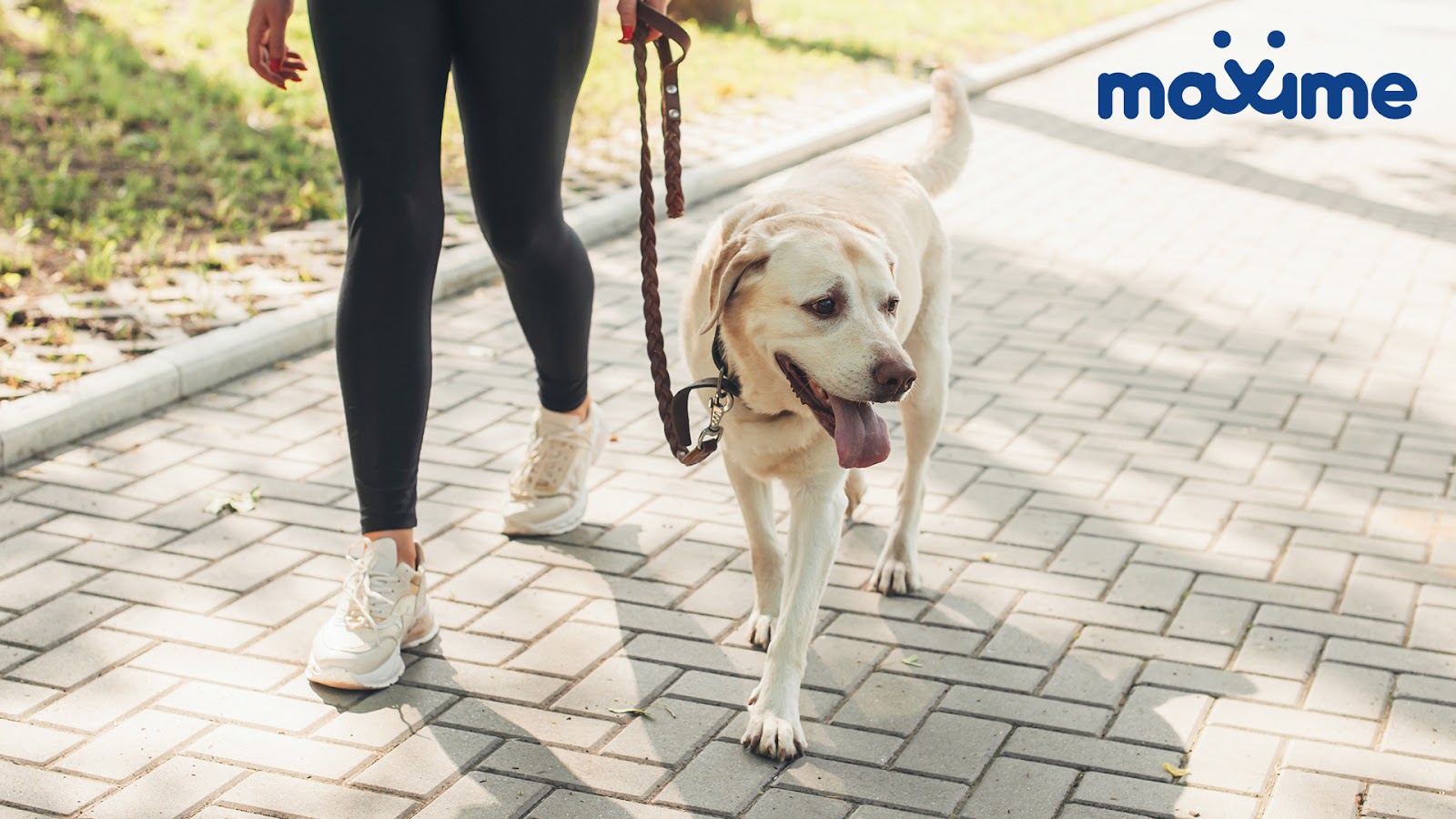
Walking your dog is an essential part of any dog paw-rent’s routine. Aside from allowing your dog to get their much-needed exercise to stay active and healthy, it’s also an enriching activity for your floof baby, as it helps them get fresh air and familiarize themselves with their surroundings outside.
It’s safe to assume that all dog owners have the same goal when bringing their doggos for a walk outside, but being reminded of a few ground rules still wouldn’t hurt. Here at Maxime, we’re committed to helping you unleash the fun while you live the best life together with your floof babies! This is why we compiled a short list of top dog paw-tocols that you can follow to ensure that you have a hassle-free stroll while staying on good terms with other dog owners and your neighbors.
Keep on reading to learn more!
1. Always use a leash.
This is a very important rule! It doesn’t matter if your dog has great recall or is used to following you around wherever you go, as long as you’re bringing your dog outside — always use a leash. Even a trained dog with great recall can easily be spooked or be upset by another dog, animal, or person. A leash gives you the means to control your dog and keep others around you safe. Additionally, no matter how small or cute your floof baby might appear, not everyone would appreciate getting approached or being sniffed by your dog out of nowhere.
When choosing a leash, choose a length based on how well-trained your dog is when walking outside. Remember, the longer the leash, the more freedomyour dog has to move away from you when walking. For starters, 4-feet is a good length for any dog or puppy. Choose a material that’s sturdy enough, especially if your floof baby is large or tends to chew on his leash. Lastly, we recommend attaching the leash to a harness instead of a collar, as a harness is generally more comfortable and secure for your dog.
2. Scoop if they poop.
Being a dog paw-rent includes having to deal with the good, the bad, and the icky! If your dog poops while you’re walking them outside, clean up after them and scoop the poop! Dog feces are not only unsightly, it can also spread diseases and parasites to other animals and people when left unattended. Plus, you don’t really want to be remembered as that bad neighbor.
3. Respect personal spaces.
Before letting your dog interact with another human or animal, make sure to ask for permission or gauge the others’ reaction first. As we’ve mentioned before, not every human or animal would automatically enjoy interacting with your dog, no matter how cute or friendly they may appear.
When passing by other pedestrians, keep your dog close to you. If your dog starts being jumpy, barks at another dog or cat along the streets, or simply starts acting unfriendly — know when to stop them and learn to walk away.
4. No trespassing.
This is a no-brainer. Never ever allow your dog to jump on somebody’s fences, walk over lawns or gardens, or go through open gates. Don’t let your dog simply pee in front of someone’s front yard, or snack on their outdoor plants and vegetation.
5. Always be alert.
Keep your full attention on your dog and don’t take your eyes off them when you’re outside. You’re the one responsible for your dog and you know your floof baby’s behavior best. Don’t let them wrap their leash around objects or other people, don’t let them trail off into a busy street, and keep them from approaching others without permission. Training your dog to sit or stop is also a great way to help them and others stay safe, in the event that your dog gets loose.
Owning a dog is a huge responsibility that should not be taken lightly. When walking your doggo outside, you’re not only in charge of their safety, but also of the others around you. Keep these simple paw-tocols in mind for more enjoyable walks with your floof baby while staying at peace with your own community!
Help your dog get the right nourishment they need for their walks and other activities by feeding them Maxime! Maxime Dog Food is formulated with high-quality proteins to help promote vitality and agility for both pups and adult dogs so you can unleash the fun and live the best life together!
References:
www.bowmanvet.com, thebark.com
Frequently Asked Questions
What does staying alert during a walk actually mean in practice?
Staying alert means maintaining unbroken attention on the dog throughout the walk — not looking at a phone, not engaging in extended conversations that distract from monitoring the animal. It means observing the dog’s body language for signs of tension, tracking where the leash is at all times to prevent it from wrapping around objects or people, keeping the dog out of traffic and away from areas with uncontrolled hazards, and being prepared to respond immediately if the dog reacts to a trigger. The owner is the dog’s safety system in public space.
Why is using a leash non-negotiable even for well-trained dogs?
Even a reliably trained dog can be triggered into unpredictable behavior by an unexpected stimulus — an unfamiliar dog, a sudden sound, or an unfamiliar person approaching too fast. A leash gives the owner the physical means to manage the dog in that moment. Beyond safety, it is also a matter of community courtesy: regardless of how friendly or small a dog may appear, not everyone in a shared space has chosen to interact with an animal. A leash ensures that interaction remains at the discretion of those around you.
What factors should guide a dog owner in choosing the right leash?
Leash length should reflect the dog’s training level — a shorter leash of around four feet provides more control for puppies or dogs still building their walking behavior. Material should match the dog’s size and habits: a heavy or persistent chewer needs a more durable material than nylon. A harness attachment is recommended over a collar, as it distributes pressure across the chest rather than concentrating it at the throat, which is both more comfortable for the dog and more secure during sudden movements.
Why is cleaning up after a dog’s waste a community health responsibility?
Dog feces left in public spaces is not merely an aesthetic issue — it is a public health concern. Canine waste can harbor pathogens including parasitic eggs, bacteria, and viruses that are transmissible to other animals and, in some cases, to humans. Beyond disease transmission, it degrades shared public spaces, creates conflict with neighbors, and erodes community goodwill toward dog owners as a group. Consistently cleaning up after a dog is the simplest expression of responsible ownership in a shared environment.
How should a dog owner manage their dog’s behavior when passing other people or animals on a walk?
When passing other pedestrians, the dog should be kept close on a shortened leash, walking calmly beside the owner rather than pulling toward strangers or other animals. If the dog begins to bark, lunge, or display reactive behavior, the appropriate response is to redirect attention, increase distance from the trigger, and calmly move away — not to force a closer interaction in hope of socialization. Owners should ask permission before allowing their dog to approach and should respect a clear refusal promptly and without protest.