
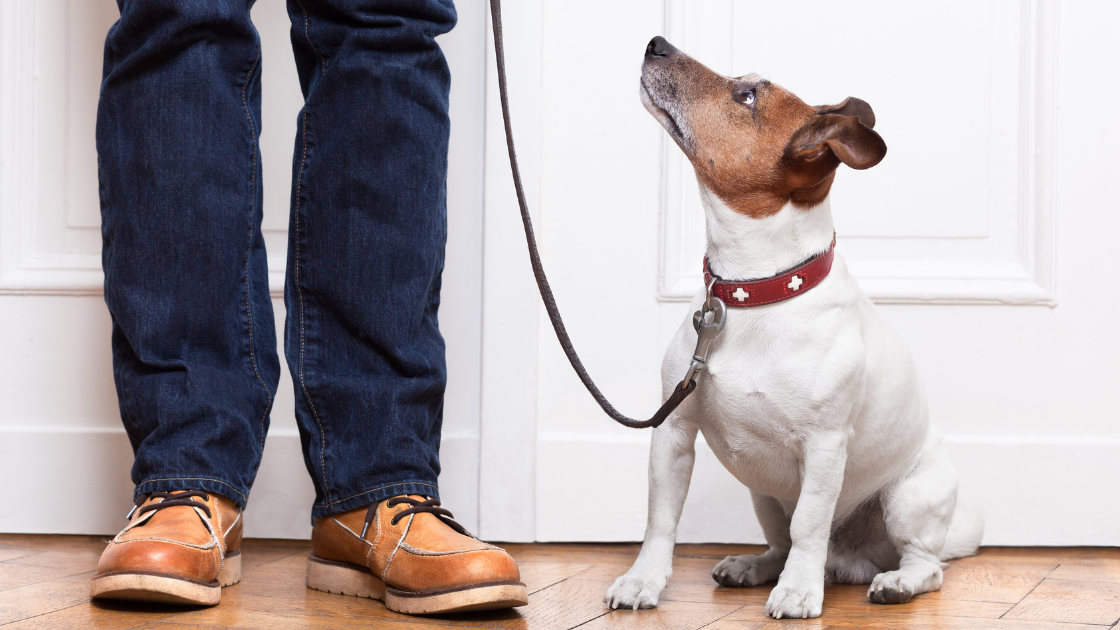
Raising a dog is somehow like raising a toddler. You feed them, clean up after them, and help enforce positive behavior to keep them from harm’s way. As a paw-rent, it’s our responsibility to teach our doggos obedience to help them grow as well-behaved floof babies.
Here at Maxime, we’ve listed some basic commands as well as a few tips on how you can train your dear doggo to learn them.
When should I start training my dog?
We recommend training your dogs as early as three months old. But this doesn’t mean that you can’t teach a well-grown adult doggo some commands! With command teaching, it’s important to capture your doggo’s full attention. Remember to pack treats (you can use Maxime kibbles!) and a lot of patience before you begin your training sessions.
Basic dog commands
- Heel/With Me – This command encourages your doggo to stay by your side while walking them without tugging on their leash. To teach this command, bring some treats and a leash. Walk your dog on your left side, all while saying the command “Heel” or “With me” and your doggo’s name. Give your floof baby treats when they walk correctly. If they start to get ahead of you, tug the leash gently to make them stop, or bring them to your side and do it again. Repeat the command as needed until they get the hang of it.
- Sit – This is one of the easiest commands you can teach your doggo. To teach this command, hold a treat by your doggo’s nose, then lift your hand towards the back of their head. This will help your doggo lower his butt to the ground as they look at your hand. If your dog doesn’t, lightly tap your dog’s back until they’re lowered into a sitting position. Once your dog is finally sitting, repeat the word sit and give them a treat.
- Stay – After teaching your dog how to sit down, the next best step is to teach them how to stay put. To teach this command, coax your floof baby in a sitting position. Hold your hands up with your palms facing forward, then say the word “stay” as you slowly move away from your dog. Remember to keep eye contact with your doggo as you move away. If they stand up and follow you, repeat the process. Let your doggo hold their stay position for 30 seconds or longer. Reward your floof baby with praises and treats after successfully learning this command.
- Come – This is an essential command that your doggo also needs to learn for their safety! Teaching your dog to immediately come when you call them could prevent them from getting into accidents, like when they dash out of your house or slip out of their leash. To teach this command, go to the other end of the room and say, “come”, then call your dog’s name with an enthusiastic voice. When your doggo comes to you, make sure to treat him with pets, praises, and treatos.
- Down/Lie down – This command can help you calm an overexcited doggo and prevent them from pouncing on guests or visitors. To teach this command, hold a treat with your closed fist and let your dog sniff the treat. Once you get their attention, gently move your hand to the floor. Continue to move your hand along the floor until your dog assumes a lying position. Once your dog has settled down, say the “down” command, then reward your doggo with a treat and praise.
Things to remember
When training your dog, it’s important to use positive reinforcement. There’s rarely a dog who would refuse treats and our domesticated floof babies always want to please. A dog rewarded with healthy treats and praises is more likely to respond to command cues.
If your doggo doesn’t master these commands on your first few training sessions, don’t fret! Like with learning any skill, repetition is the key to mastery. Practice with your doggo at least 3-5x a day. Do remember to keep your training short though; dogs have a short attention span. Your training sessions should last no longer than 15 minutes.
Lastly — patience, patience, and patience. Dog training is a good time to strengthen the relationship between you and your floof baby. By learning these commands, your doggos can win your approval. By teaching these commands, you help your dog be obedient and responsive. It goes both ways. Make sure to incorporate heaps of love into each training session so you can #LiveTheBestLifeTogether with your floof baby!
References:
5 Basic Puppy Commands, FigoPetInsurance.com
10 Commands To Teach Your Dog, Dogue.com.au
Tips On Training Your Dog | MyPet, MyPet.com
Frequently Asked Questions
1. At what age should dog training begin, and why does starting early produce better long-term behavioral outcomes?
Training can begin as early as three months of age — and starting early delivers significantly better outcomes because puppies are in a critical developmental window where neural pathways are being established and behavioral patterns are forming. Commands learned during this period become deeply ingrained rather than learned over existing habits. Early training also establishes the owner as a consistent, reliable presence that provides predictable structure — reducing anxiety-driven behaviors and accelerating the development of a well-adjusted, responsive adult dog.
2. Why is the “Heel” or “With Me” command one of the most practically valuable commands for Philippine dog owners specifically?
Walking dogs safely in Philippine neighborhoods — where traffic, stray dogs, and crowded sidewalks are everyday realities — requires reliable leash walking behavior. A dog that pulls, lunges, or darts away from the owner’s side creates genuine safety risks in these environments. The “Heel” command teaches the dog to remain calmly alongside the owner regardless of distractions, making walks safer, more enjoyable, and less physically taxing for the owner. It is among the most directly applicable commands to everyday urban and suburban Philippine pet ownership.
3. How do the “Stay” and “Come” commands work together as a safety system for dogs in high-risk situations?
These two commands function as a coordinated safety protocol. “Stay” allows the owner to freeze a dog in position when an immediate hazard appears — a passing vehicle, an approaching aggressive dog, or an open gate. “Come” then recalls the dog to the owner’s side reliably from any distance. Together, they give the fur parent control at a distance — the most dangerous situations are often those where the dog is not physically within reach. Mastering both commands consistently could genuinely prevent accidents that result in serious injury or death.
4. Why is the “Down/Lie Down” command particularly important for managing dog behavior in social situations?
The “Down” command places a dog in a physically submissive, calm posture that automatically reduces arousal levels — it is neurologically difficult for a dog to maintain high excitement from a prone position. This makes it invaluable for managing a dog that is prone to jumping on guests, begging at the dining table, or becoming over-excited during visitors’ arrival. In the Philippine household context — where extended family visits and social gatherings are frequent — a reliably trained “Down” command is one of the most valuable social management tools a fur parent can develop.
5. What training principles make the difference between a dog that obeys reliably and one that only obeys inconsistently?
Three factors determine training reliability: consistency of the command cue — using the exact same word and tone every time; immediacy of the reward — the treat or praise must arrive within seconds of the correct behavior to create the right neural association; and session frequency and brevity — three to five sessions of no more than 15 minutes daily produces far stronger retention than occasional long sessions. Patience is the underlying requirement that makes all three principles work — a fur parent who remains calm and positive throughout every session produces a dog that is genuinely eager to respond.