
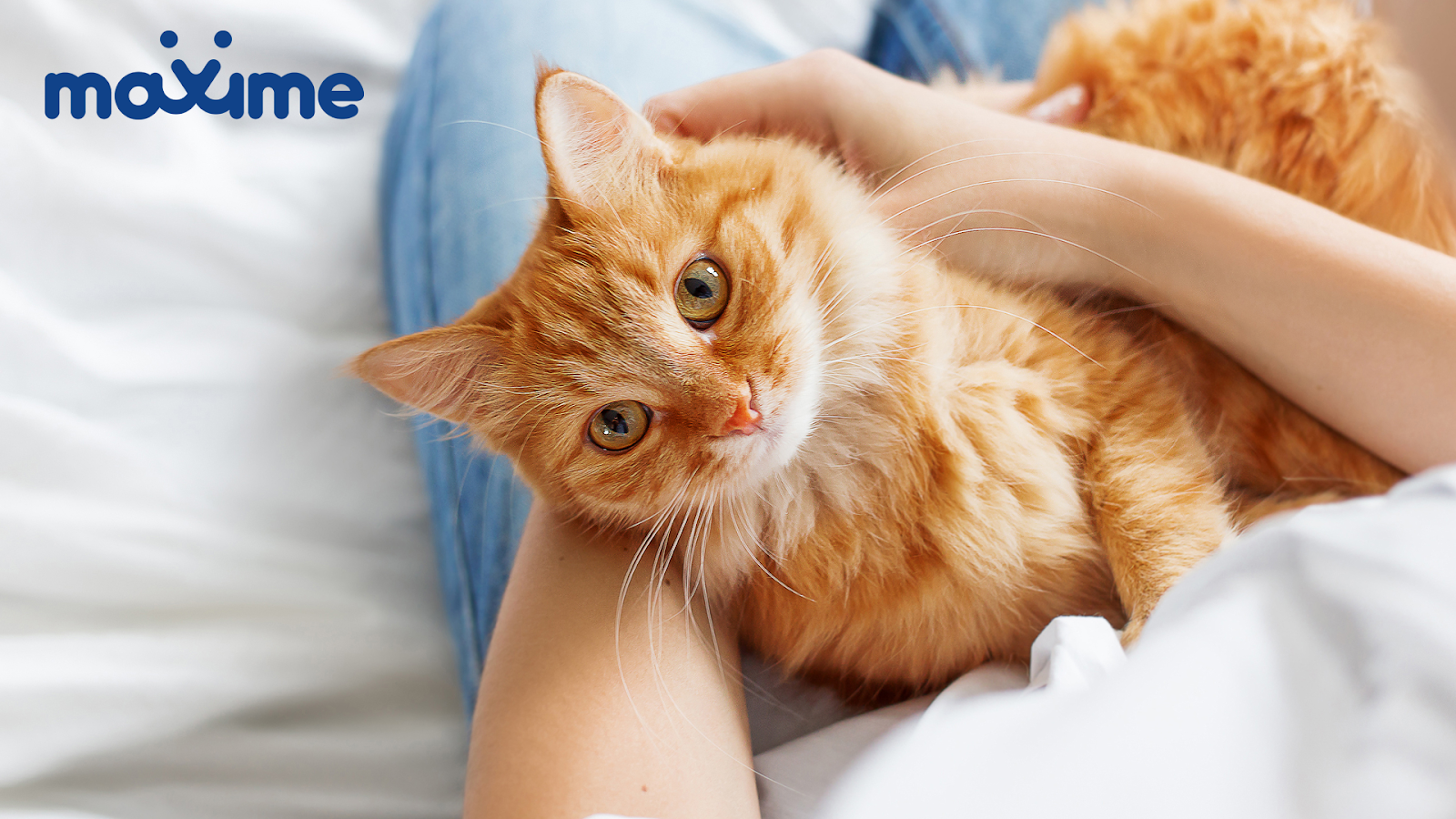
The new year brings us fresh beginnings. It’s a great time for us to self-reflect as it creates another opportunity for us to live the best life together with our beloved cattos by creating paw-some moments with them every day.
To start anew and make sure that we continue to give our floof babies the best life possible, our team of experts here at Maxime created a comprehensive list of New Year’s resolutions that every paw-rent could do.
1. Update your pet’s vaccination.
You can prevent rabies and many feline diseases through core vaccinations. Pet vaccines, just like human vaccines, may need a booster in order for them to be effective. Depending on the vaccines, your cat may be required to have a booster yearly or every 2-3 years. Stay on top of your floof baby’s health by consulting your trusted veterinarian and updating their vaccines according to their recommended schedule.
Sample vaccination schedule for cats (core vaccines):
| Cat vaccine | Initial vaccination for adult cats (over 16 weeks of age) | Booster recommendation |
| Rabies | Single dose | Required annually or every 3 years, depending on the vaccine used. |
| Feline Distemper / Feline Panleukopenia Virus (FPV) | 2 doses, 3-4 weeks apart* | 1 dose is given a year after initial vaccination, then every 3 years |
| Feline Herpesvirus (FHV-1) | 2 doses, 3-4 weeks apart* | 1 dose is given a year after initial vaccination, then every 3 years |
| Feline Calicivirus (FCV) | 2 doses, 3-4 weeks apart* | 1 dose is given a year after initial vaccination, then every 3 years |
| Feline Leukemia Virus (FeLV) | 2 doses, 3-4 weeks apart* | 1 dose is given a year after initial vaccination, then every 3 years |
*Schedule shown above is a sample only. Please consult your trusted veterinarian for your cat’s own vaccination schedule.
2. Play with your cats more frequently.
Many of us are busy people who have to juggle multiple responsibilities — work, household chores, and errands. As much as we want to play and cuddle with our cats all day, sometimes we just don’t know how to squeeze it into our schedule.
This doesn’t mean we should abandon playtime with our feline babies altogether, though! Playtime helps keep our cats active and stimulates their mental health. Try to inject playtime with your floof babies by allocating at least 15 minutes of playtime into your schedule (contrary to popular belief, playtime sessions don’t have to be long!). You can also consider getting your cat an electronic toy or a food dispenser toy that they can play with.
3. Give your catto more hugs & kisses.
Kitties get a bad rep of being aloof and independent but we cat pawrents know more than anyone else that our feline babies are social animals! They love to cuddle against our feet, rub their cheeks against us, and exchange slow blinks with us.
Despite how busy life may get, find the time to give your floof baby the good, ol’ snuggle! Besides, did you know that petting your cat releases a chemical in your brain called oxytocin, which is also known as the “love hormone”? Scientific studies suggest that snuggling with our pets helps reduce anxiety, so go give your cattos more hugs and kisses!
4. Provide your cat good nourishment with Maxime cat food.
Good health always starts with good nutrition! Provide a nutritionally-balanced meal to your dear cattos with Maxime Cat Food. Each bag of Maxime is enriched with taurine for vision support and formulated in easily digestible ingredients for your cat’s easy digestion. It also comes in two delicious flavors of tuna and salmon to delight your feline babies with every meal!
We hope these new year’s resolutions can help you start another wonderful year with floof babies. Don’t forget to follow our social media pages and check our website for more exciting updates!
References:
7 Tips for Playing with Cats for Busy People, pet-happy.com
7 Reasons Why Humans and Cats Are A Match Made In Heaven, medium.com
Frequently Asked Questions
1. Why is updating a cat’s vaccination an important new year priority for pet owners?
Many cat owners keep up with initial kitten vaccines but allow booster schedules to lapse as their cat grows into adulthood. Vaccines against rabies, feline panleukopenia, herpesvirus, calicivirus, and feline leukemia require periodic boosters — some annually, some every three years — to maintain effective immunity. A lapsed vaccine provides declining protection that may reach zero before the next scheduled dose. Consulting a veterinarian at the start of each year to review and update the cat’s vaccination record is the simplest and most impactful preventive health step a cat owner can take.
2. How much playtime does a cat actually need, and how can busy owners realistically incorporate it?
Despite the myth that cats are self-sufficient entertainers, they benefit meaningfully from dedicated interactive play with their owners. Even 15 minutes of structured play per day — using a feather wand, laser pointer, or interactive toy — provides sufficient physical exercise and mental stimulation for most indoor adult cats. For owners with demanding schedules, splitting this into two 7-to-8-minute sessions morning and evening is equally effective. Electronic or food-dispensing toys can supplement but should not fully replace human-led play, which also reinforces the owner-cat social bond.
3. What is the scientific basis for physical affection between humans and cats being beneficial to both?
Research in human-animal interaction has confirmed that physical contact with pets — including petting and cuddling — triggers the release of oxytocin, the bonding and trust hormone, in both humans and their animals. In humans, elevated oxytocin is associated with reduced cortisol (the primary stress hormone), lowered heart rate and blood pressure, and improved mood. For cats, regular gentle handling builds comfort with human touch, reducing stress responses during veterinary visits, grooming, and unexpected situations requiring restraint.
4. What does a nutritionally balanced cat food actually provide that unbalanced diets miss?
A complete and balanced cat food is formulated to meet all of a cat’s essential nutrient requirements in the correct proportions — including high-quality animal protein as the primary energy source, taurine for cardiac and visual health (which cats cannot synthesize sufficiently on their own), essential fatty acids for coat and skin condition, and precisely calibrated minerals to support urinary tract health. Diets based on human food, single-ingredient meals, or low-quality commercial options frequently create deficiencies in one or more of these categories, with health consequences that accumulate gradually and become apparent months or years later.
5. How does committing to these four resolutions collectively improve a cat’s quality and length of life?
The four resolutions — vaccination, play, affection, and nutrition — address the four core dimensions of feline wellbeing: disease prevention, physical and mental health, emotional security, and nutritional foundation. Neglecting any one creates a gap that the others cannot fully compensate for. A cat that is well-fed but under-stimulated develops behavioral issues. A cat that is loved but unvaccinated remains disease-vulnerable. Taken together as consistent daily and annual commitments, these resolutions form a comprehensive care framework that meaningfully extends healthy lifespan and improves day-to-day quality of life.