
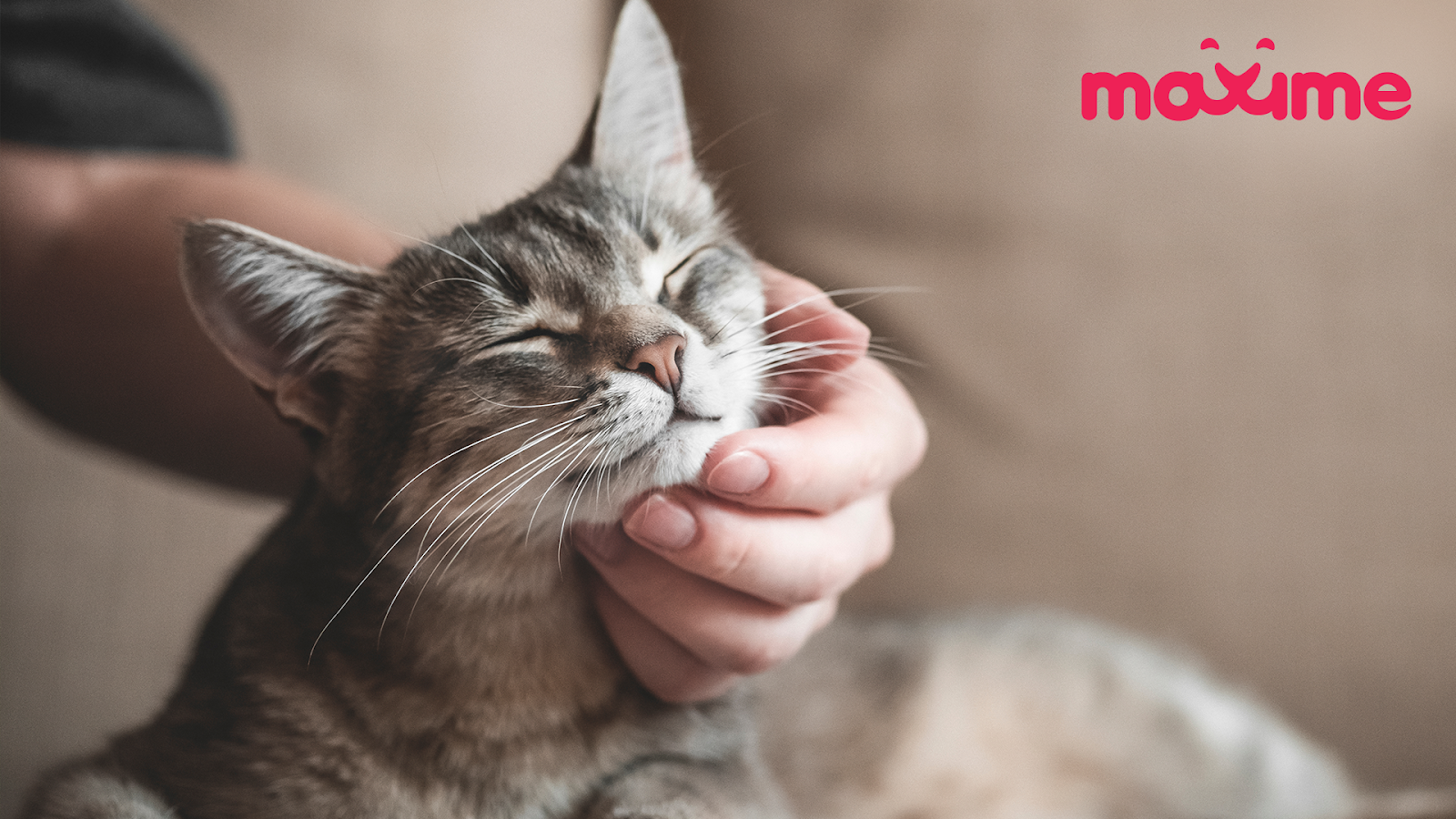
Admit it or not, our precious feline friends often get the bad rep compared to their canine counterparts. From black cats being labeled as unlucky to the old adage that goes “cats have nine lives” — the list goes on!
Here at Maxime, we’ve gathered our team of catto experts to set things straight and separate facts from fiction. Here are some stereotypes that need to go!
1. Black cats bring bad luck.
For the longest time, people have always associated black cats with bad luck. In some countries, there’s a superstition that crossing paths with them is a bad omen. In the West, black cats are often associated with witchcraft and the supernatural.
Unfortunately, this common misconception has brought nothing but misfortune to no one but black cats themselves! Black cats and their litters are often abandoned and have significantly lower adoption rates compared to their multi-colored counterparts.
If there’s anything remotely magical about black cats, we’re sure it’s their ability to provide unconditional affection and cuteness, just like any other cat! Don’t be afraid to provide black cats with lots of love and admire their majestic dark fur.
2. Cats are not affectionate
Perhaps, one of the biggest debates until today is whether cats are as affectionate and loving as their canine counterparts. Cats are often viewed as independent and cold-hearted animals who probably won’t bat an eye if their owners disappear for a long time.
If you’ve spent a day with a house cat, we’re sure you’d know that this is false! Cats can be loving and affectionate, too! They just happen to show it in a different way than dogs. Cats might not immediately pounce on you when you get home after a long day outdoors, but they will often show their love through silent purrs, head rubs, and by sitting beside you or lying on your lap.
3. Cats are nocturnal
Is your catto having zoomies at night? If your cat’s nighttime activities have kept you awake at least once or twice, you might have gotten the impression that cats are nocturnal but this is not true — they’re crepuscular! This means they are most active during dawn and dusk while they get their rest during the day.
Despite being domesticated, house cats retained this instinct from their ancestors. Cats are most active during the wee hours of the morning because this is the perfect time to hunt in the desert; the temperature is cool enough and the darkness provides them coverage from bigger predators while allowing them enough light to hunt their prey. If you often find your catto disturbing your sleep, you have to adjust their body clock to align with yours. Check out our tips here to know how you can help cats adjust to your own sleeping schedule.
4. Cats always land on their feet
Our feline companions have incredible agility. Cats are such excellent jumpers that in fact, an average healthy adult cat can jump up to six times their height! What’s even more amazing is that cats nearly always land on their feet. It’s all thanks to their righting reflex, a cat’s innate ability to correct their body orientation as they fall so they’d land on their feet.
But sadly, this is not always the case.
Just like us humans, cats do not often survive falling from extreme heights. A cat who sticks a great landing while jumping from a cat tree might sustain broken bones and other injuries if they fall from a balcony or a window.
5. Cats have nine lives
As much as we want our cattos to live forever, the short answer is no — cats only have one life, just like we do.
But how exactly did this myth start?
This common misconception was believed to have been started by this ancient proverb: “A cat has nine lives. For three he plays, for three he strays, and for the last three he stays.” We don’t know where or who started the proverb, but English playwright William Shakespeare referenced it in his play Romeo & Juliet. And the rest, as you would guess, is history.
We hope debunking these myths have helped you get to know your dear cattos better! Live the best life together with your purr-ecious feline babies and provide them a nutritionally-balanced meal by feeding them Maxime Cat Food.
References:
https://www.bluecross.org.uk/advice/cat/12-common-cat-myths-debunked
https://cfa.org/myths-and-facts-about-cats/
Frequently Asked Questions
1. What is the origin of the black cat superstition and what is the real impact on black cats?
The association between black cats and bad luck originates primarily from Western European folklore — particularly in medieval England where black cats were linked to witchcraft and the supernatural. This unfounded superstition has had real, measurable consequences: black cats and their litters consistently have lower adoption rates at shelters compared to cats of other coat colors, and are more frequently abandoned. The folklore has no factual basis; a cat’s coat color has no relationship whatsoever to the outcomes or fortunes of the people around them.
2. Are cats actually cold and unaffectionate, or do they express affection differently from dogs?
Cats are genuinely affectionate, but their emotional expression operates on a different register than dogs. Where dogs express happiness through exuberant, immediate physical interaction, cats communicate through subtler, sustained signals: slow blinks as a gesture of trust, headbutting to mark a person as part of their social territory, purring during proximity, and choosing to remain in the same space as their owner. These are meaningful social behaviors, not the absence of feeling. Misreading feline communication as coldness reflects a misunderstanding of the species rather than a genuine deficit in affection.
3. Why are cats not actually nocturnal, and what does being crepuscular mean for daily life with a cat?
Nocturnal animals are active primarily in complete darkness; cats are actually crepuscular, meaning their peak activity occurs at dawn and dusk. This pattern evolved from their desert-dwelling ancestors, for whom the low-light periods provided both cooler temperatures and optimal hunting conditions — enough light to see prey while darkness provided cover from larger predators. In a domestic setting, this explains why cats are often restless or playful at 4 or 5 AM — their biology is aligned to those hours. Adjusting playtime schedules can help shift this pattern toward more owner-compatible hours.
4. What is the “righting reflex” and why doesn’t it guarantee that cats always land safely?
The righting reflex is an innate vestibular ability that allows cats to reorient their body during a fall so their feet face downward. It is initiated by signals from the inner ear and visual system and occurs even in kittens. However, this reflex does not guarantee a safe landing — it only improves orientation during the fall. From very low heights, there is insufficient time for the reflex to engage fully. From extreme heights, impact force exceeds what even a correctly oriented landing position can mitigate. Falls from windows and balconies remain a genuine source of serious injury and death in cats.
5. Where did the “nine lives” myth come from, and what does it mean for how we care for cats?
The nine lives myth is traced to a combination of ancient proverbs — including one attributed to wider cultural usage that William Shakespeare referenced in Romeo and Juliet — and the general observation that cats survive situations that would injure or kill other animals. Their physical agility, flexible skeletal structure, and righting reflex have historically made them appear preternaturally resilient. The danger of the myth lies not in its charm but in the complacency it can create: cats have one life, are vulnerable to illness, injury, and age, and deserve the same level of preventive healthcare and protective care as any other pet.